“The reading of all good books is like a conversation with the finest (people) of the past centuries.” – René Descartes.
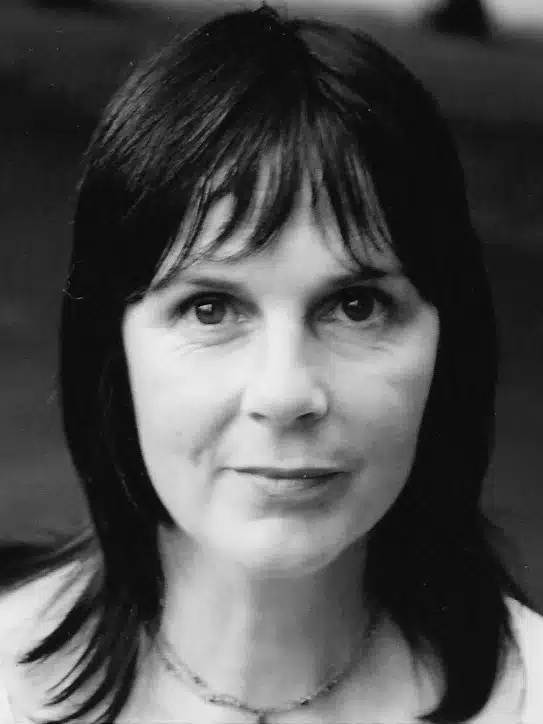
It is hard to believe it is seven years since Helen Lamb died and six years since her brilliant debut novel, Three Kinds of Kissing, was published posthumously by Vagabond Voices. It is a gripping coming-of-age story about two teenage girls and the dark secret that binds them together. I can only describe it as a subtly devastating wonder.
Helen was a gifted novelist, poet and short story writer. She was also my first writing mentor and a close friend. Even now, I find it strange to see her author biography written in the past tense. Awards won, poetry and short story collections published and featured on radio. Her work as a Royal Literary fellow and a university tutor. Her community work with adult survivors of childhood abuse and her passion for the connection between words and wellbeing, which she pursued through organisations such as Lapidus Scotland and the cancer charity, Maggie’s.
As her official biography describes, Helen died shortly after finishing Three Kinds of Kissing. She and I were writing our debut novels in tandem and during our regular lunch dates in Crieff, we would discuss our works in progress. I know how much love, care and hard work Helen poured into that novel. When it was finished, she was excited at the thought of sending it out into the world. Her sudden death not only deprived her family and friends of a much-loved person, it also deprived Helen of the chance to see her debut novel published.
It is only because of the courage and dedication of Vagabond Voices that Three Kinds of Kissing is available to readers. Helen’s partner, the writer Chris Powici, and Helen’s oldest friend, the writer Magi Gibson, were determined to see this novel published but initially met with reluctant rejections from the publishers they approached. No one was willing to take on a book without an author to publicise it. Not even Helen’s previous writing success and the glowing endorsements Three Kinds of Kissing had received from other writers could persuade them. When Vagabond Voices accepted the novel, they did so not as a sympathy project, but because they believed it was a compelling and important piece of work. One worthy of a wide readership. I agree with them. I have no doubt that had Helen been alive, she would have seen her novel widely reviewed and nominated for awards. Such accolades won’t be added to her author biography now. That part of her story is over.
As an author myself, I more than understand the tough, competitive nature of the current publishing climate. However, it does seem strange to reject a novel by a dead author when so many of our most loved stories are written by authors long departed. Descartes is right when he says the experience of reading a book by a dead author can be like having a conversation with a fine person. One of the interesting recent trends in publishing is the increased sales of classic novels like George Orwell’s 1984 and James Joyce’s Ulysses, all because of young reviewers on Tik Tok discovering them for the first time and promoting them.
I’ve always loved the idea of a book being a conversation between author and reader. When the author is dead, the idea of their words being a link between the living and the dead is magical to me. I miss Helen. I miss her as a friend, with her straight talking and invaluable wisdom. I also miss her as a mentor, with her uncanny ability to pinpoint the cause of any problem I might be having with my work. The way she championed my writing but also never shied away from telling me when I could do better. One of her poems, ‘Spell of the Bridge’, is pinned to the wall above my desk, and I keep a copy of Three Kinds of Kissing nearby when I’m working. Reading her words is both a pleasure and a masterclass in the craft of writing.
In the process of working on this piece, I had a different kind of communion with my dead friend that was both unexpected and life-affirming. I was honoured to be asked to write about Three Kinds of Kissing and keen to get started. However, I had a deadline to meet for another piece of work and a launch for a new novel, so I had to put the task aside for a few weeks. During that time, I slipped into a writing funk. There were minor aspects of the publication of my new novel I wasn’t happy with, and I was struggling to find a way into the new novel I was supposed to be working on. I was locked in the kind of petty ego struggles writers strive to rise above but find themselves caught up in again and again.
It was in this negative mindset that I sat down with my journal one night to rant on the page. I would, I decided, vent my dissatisfaction with the world and get it out of my system. Instead, I found myself outlining ideas for this piece. All I wanted to do was moan about my situation, but whenever I tried, I found Helen waiting for me. Still writing, I started to laugh. Helen was exactly the person I needed to drag me out of my self-pitying mood and here she was, on the page, talking to me. I pictured us sitting in our favourite café in Crieff and I could see her looking at me with those wise, dark eyes of hers and I could hear her telling me to pull myself together. Telling me the problems I had were good ones and she wouldn’t mind grappling with them herself if she had the chance. I found myself laughing and crying at the same time as I realised Helen and I were communicating. Connecting through the words I was scrawling on the page. Once again, she had come to my rescue and told me what I needed to hear.
Words. I realise now I was wrong about Helen’s author biography being finished. It is added to every time someone reads her work. She is still here, taking part in an ongoing conversation. Join in. Read Three Kinds of Kissing. Not only is it a beautifully written, deeply affecting novel, but you will also get to connect with one of the finest people I know.


